

Info Point
C
e
s
i
.
C
’
è
Loading

- info@cesiportadellumbria.it
- Cesi, 05100 Terni (TR), Umbria, Italia
Along the Via Flaminia: where every step tells a story
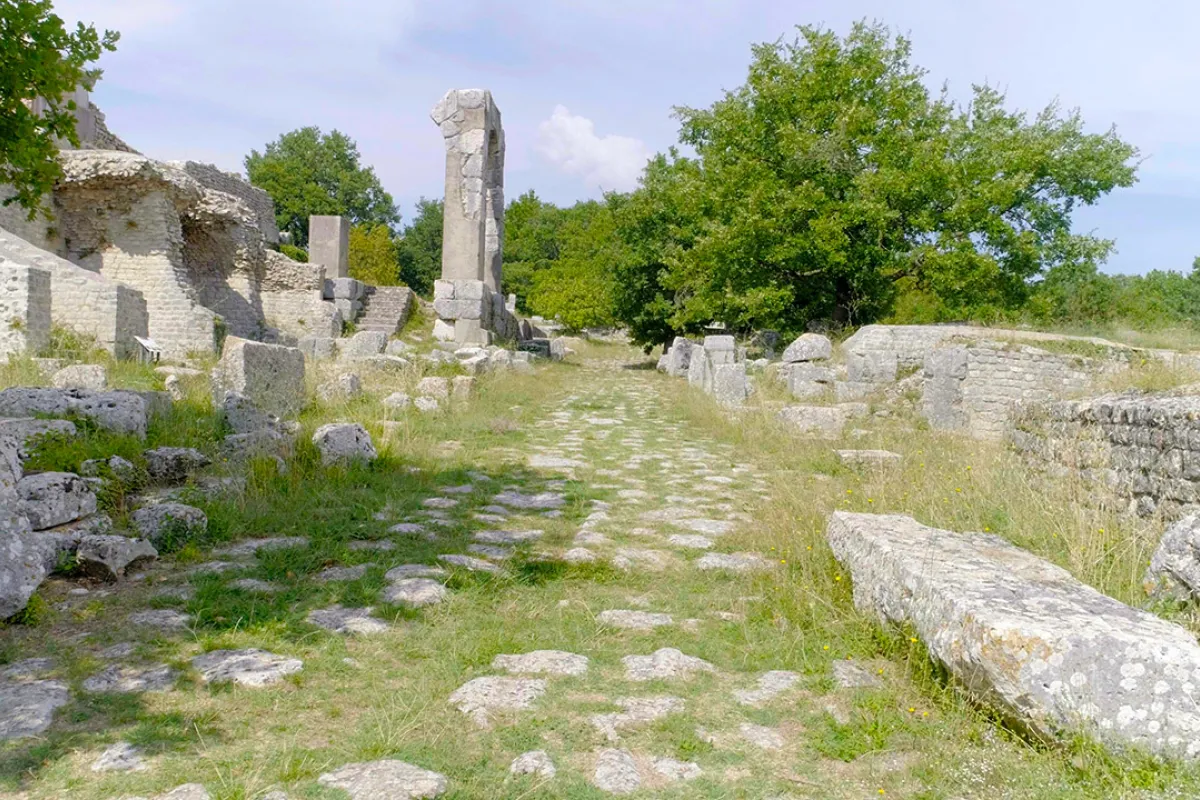
Our journey begins in Cesi, following the ancient route of the Via Flaminia that once passed through the village. Descending into the valley, history comes alive in the ancient Municipium of Carsulae, a Roman city that was founded and developed in close connection with this consular road.
Continuing northward, you encounter the castle of Portaria, where Lucrezia Borgia stayed in 1499, before reaching Acquasparta.
Just a short distance away stands the castle of Firenzuola, a village that has preserved intact the charm of its fourteenth-century origins.
For those fascinated by abandoned places, a detour toward the Martani Mountains leads to the rocky spur of Scoppio, an evocative ghost village overlooking the plain below in an atmosphere of absolute silence.
The itinerary returns to follow the Flaminia Vetus near Villa San Faustino, a unique site that combines the remains of a Roman villa with the only Christian catacomb in Umbria.
A short distance away, imperial engineering reveals its full grandeur in the Ponte Fonnaia, built in travertine and still perfectly preserved.
The journey finds its worthy conclusion at the church of Santa Maria in Pantano, an early medieval jewel set in the peaceful countryside of Massa Martana, where Romanesque architecture seems to suspend time.
From here, the Via Flaminia continued its course northward, crossing the rest of Umbria before finally reaching Fano.
Near to "The Via Flaminia"
RES NOVA IL COLLE
Via Campagna di Portaria, 62 - Località Portaria (TR)
Phone +39 0744 931100
CIR:
Web: go to site
@: view email
